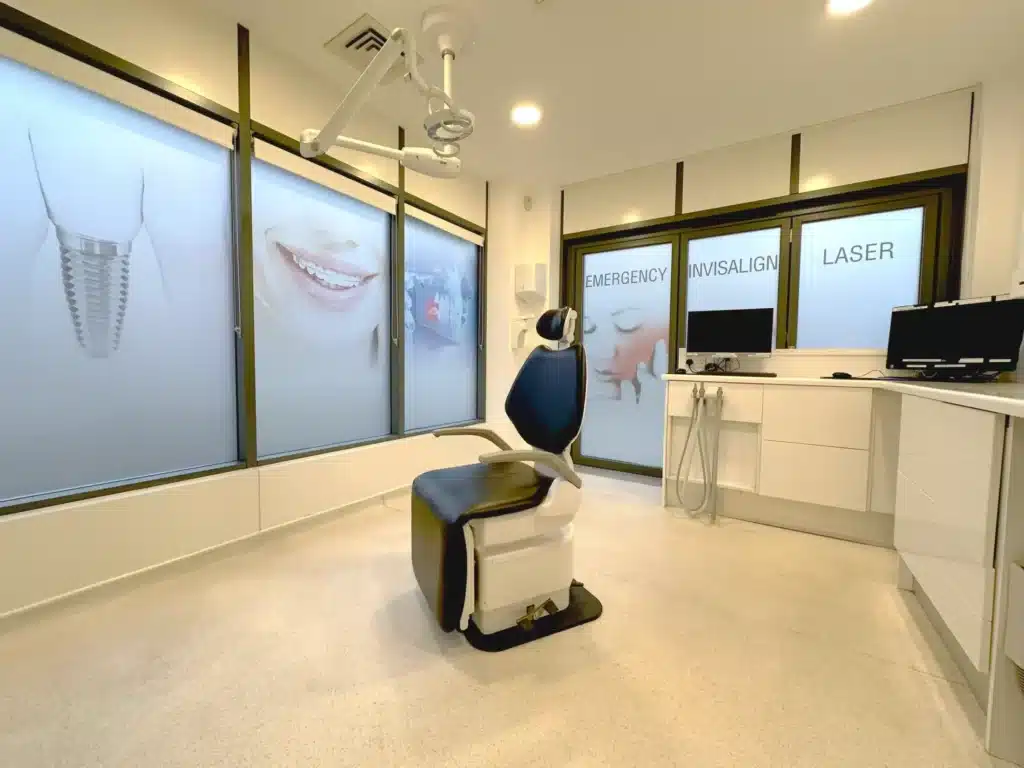
What does your dentist actually look for during a check-up? There's more to a dental examination than you might think.
Most of us know that regular dental check-ups are important. But have you ever wondered what your dentist is actually looking for?
A dental check-up involves much more than searching for cavities. Your dentist also examines your gums, checks for signs of tooth wear, assesses your bite and looks for changes in the soft tissues of your mouth.
At Cambridge Dental Hub, we believe that understanding your oral health is an important part of looking after it. Here's what you can expect during your appointment.
Why Are Regular Dental Check-Ups Important?
One of the biggest misconceptions about dental health is that if nothing hurts, everything must be fine.
Unfortunately, that isn't always the case.
Tooth decay and gum disease can develop without obvious symptoms. By the time you notice pain or discomfort, a problem may already be more advanced.
Regular dental examinations help your dentist identify these changes early, often when treatment is simpler and less invasive.
For example, very early tooth decay can sometimes be managed with preventive measures rather than a filling.
Prevention is always better than cure, and attending regular check-ups is one of the simplest ways to look after your long-term oral health.
How Often Should You Have a Dental Check-Up?
For many patients, a dental check-up once a year is a sensible starting point. However, some people may benefit from more frequent appointments.
Your dentist will consider factors such as your risk of tooth decay, gum health, medical history, lifestyle and previous dental treatment when recommending how often you should attend.
Patients with a higher risk of dental problems may be advised to visit every three or six months.
The important thing is to attend at the intervals recommended by your dentist. Regular examinations provide more opportunities to identify developing problems before they require more extensive treatment.
1. First, Let's Talk About Your Dental Health
Your appointment begins with a conversation.
Your dentist will review your medical and dental history and ask whether you've noticed any problems with your teeth or gums.
This is also your opportunity to raise questions or concerns.
Perhaps you've noticed sensitivity, bleeding gums, discomfort when chewing or a chipped tooth. Even if something seems minor, it's worth mentioning.
Your dentist will listen to your concerns, investigate where necessary and explain any findings.
2. Checking Your Teeth and Gums
Next, your dentist will carefully examine your teeth, looking for signs of decay, cracks, broken teeth, excessive wear and problems with existing fillings or crowns.
They'll also assess your bite and look for signs of grinding or clenching.
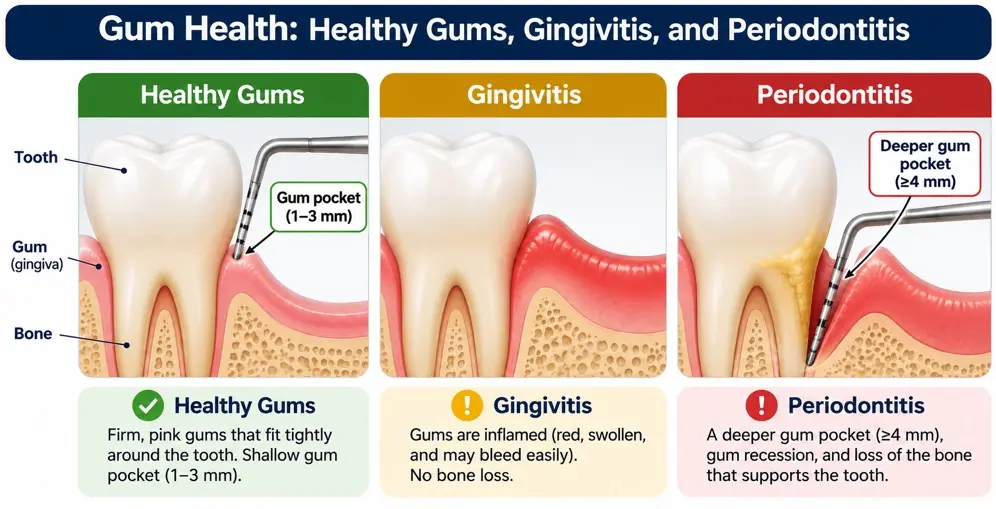
How do dentists check your gums?
Healthy gums are essential for oral health.
Your dentist may carry out a Basic Periodontal Examination (BPE), a routine screening used in UK dentistry to check for signs of gum disease.
Using a dental probe, they gently check the spaces between your teeth and gums, looking out for any bleeding, tartar/calculus and deeper gum pockets.
You might hear your dentist calling out numbers. These scores help indicate whether your gums appear healthy or whether further assessment or treatment may be needed.
Gum disease can develop without pain, which makes regular screening particularly important.
3. Checking the Soft Tissues of Your Mouth
Your dental check-up isn't just about your teeth.
Your dentist will also examine your tongue, cheeks, lips, gums and other soft tissues, looking for unusual changes such as persistent ulcers, lumps or red and white patches.
This is an important part of checking for possible signs of oral cancer and other conditions.
Most unusual findings are harmless, but identifying anything concerning early allows your dentist to arrange further investigation where needed.
4. Dental X-Rays: Seeing What the Eye Cannot
Even the most careful examination can't reveal everything.
Decay can develop between teeth or beneath existing fillings, while infections and other problems may occur around the roots of teeth.
Calculus and tartar can also build up under the gum line and lead to bone loss – so x-rays can be very helpful in evaluating gum disease, checking for calculus and/or bone loss and then planning clinically appropriate treatment.
Dental X-rays help your dentist see these hidden areas, make a more accurate diagnosis and plan treatment safely.
They are commonly taken during dental examinations, including check-ups and emergency appointments.
The Three Main Types of Dental X-Ray
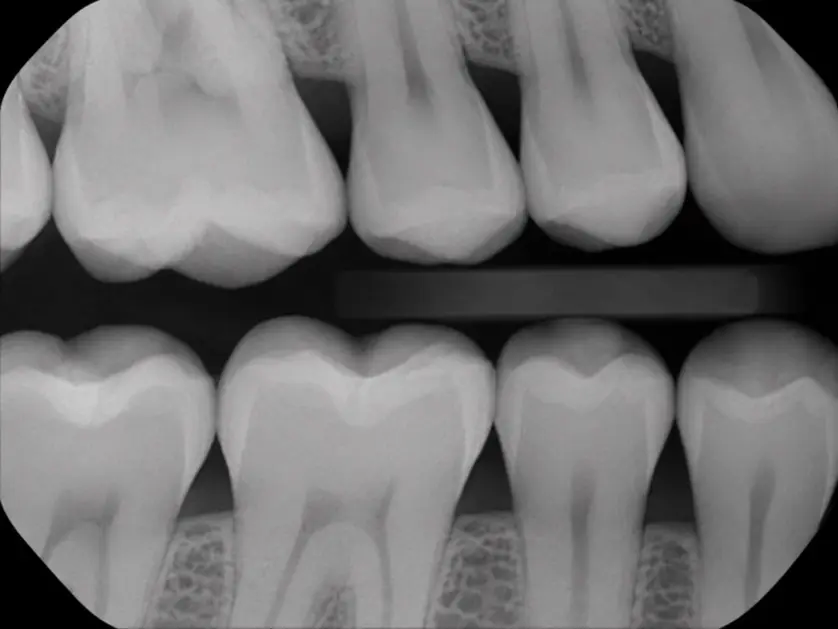
Bitewing X-rays: Checking between teeth
Bitewings are particularly useful for spotting decay between neighbouring teeth, where it may not be visible during a routine examination. They also help the dentist to identify large deposits of calculus/tartar and bone levels.
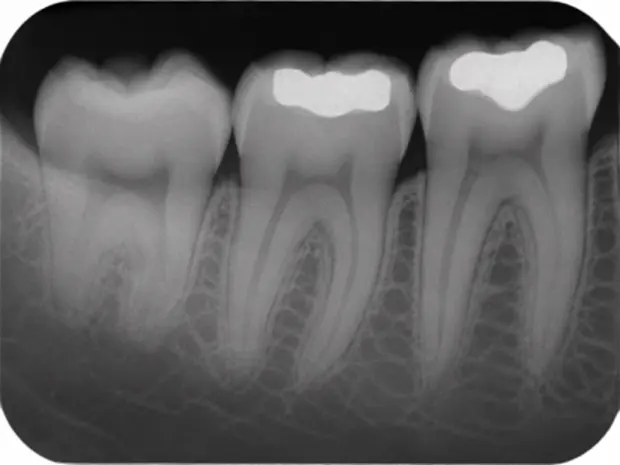
Periapical (PA) X-rays: Looking at the roots
A periapical X-ray shows the whole tooth, including its roots and surrounding bone. It's often used to investigate toothache, gum disease, infections or problems beneath the gum.
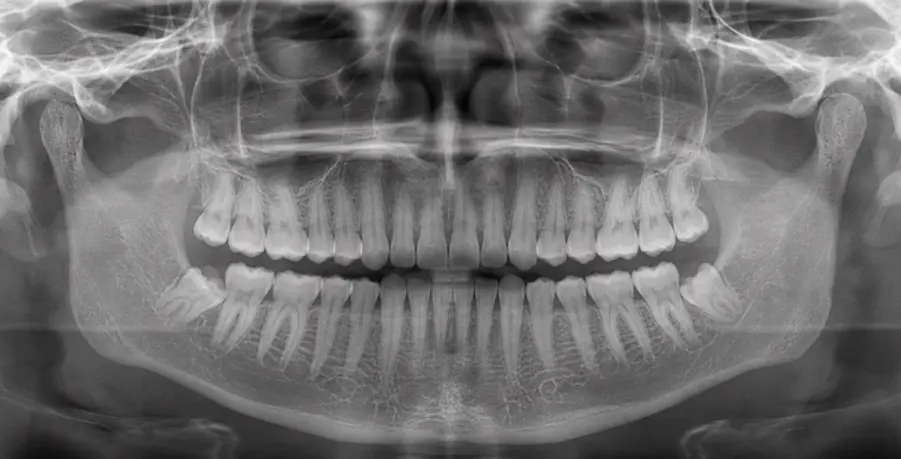
OPG X-rays: The bigger picture
An OPG is a panoramic X-ray showing both jaws in one image. It's particularly useful for assessing wisdom teeth, the position of teeth and certain jaw problems.
Why Are X-Rays Sometimes Essential Before Treatment?
A cavity that looks small on the surface can sometimes extend much deeper into the tooth.
Without an X-ray, your dentist may not be able to determine the full extent of the decay or assess what's happening around the roots.
X-rays can also be an essential part in the assessment and treatment of gum disease, allowing the dentist to evaluate the presence of calculus and measure bone loss.
This information can make an important difference to the treatment recommended.
When an X-ray is clinically necessary, it helps your dentist plan treatment as safely and effectively as possible. In some cases, treatment cannot appropriately proceed without it.
Dental X-rays use low doses of radiation and are recommended only when the expected clinical benefit justifies the exposure.
How Much Does a Dental Check-Up Cost at Cambridge Dental Hub?
We believe in clear, transparent pricing so you know what to expect.
| Service | Price |
| Dental examination | £25 |
| Small dental X-ray (bitewing or PA) | £9 each |
| Large dental X-ray (OPG) | £35 each |
X-rays are charged separately from the £25 examination fee and are recommended only when clinically necessary.
For example, an examination with two bitewing x-rays would cost £43 (£25 + £9 + £9).
An examination with a large x-ray and two bitewing x-rays would cost £78 (£25 + £35 + £9 +£9).
Your dentist will explain why any X-rays are recommended.
5. Understanding Your Results and Treatment Options
Once your examination is complete, your dentist will explain their findings and discuss any recommended treatment.
Some patients may simply need reassurance and advice on maintaining healthy teeth and gums. Others may need treatment, such as a filling, or further investigation.
If treatment is recommended, your dentist will explain the available options, including their benefits, risks and costs.
At Cambridge Dental Hub, we believe patients should feel informed and involved in decisions about their care.
Clear Treatment Costs and Finance Options
You'll be given a clear explanation of any recommended treatment and its associated costs, with a written treatment plan and estimate where appropriate.
For more extensive treatment, finance options may be available to help spread the cost, subject to eligibility and terms and conditions.
Our team can explain the options available and answer any questions before you make a decision.
Finance is subject to status, eligibility, lender approval and terms and conditions. Please ask our team for full details.
6. Personalised Advice for a Healthier Smile
Before you leave, your dentist may offer advice tailored to your oral health, from brushing and cleaning between your teeth to reducing your risk of decay and gum disease.
They may recommend prescription fluoride toothpaste, such as Duraphat 5000.
They'll also recommend when you should return for your next check-up, based on your individual needs.
Book Your Dental Check-Up in Cambridge
A dental check-up is about more than finding problems. It's an opportunity to understand your oral health, ask questions and take steps to prevent future issues.
At Cambridge Dental Hub, our comprehensive dental examinations cost just £25, with any X-rays charged separately.
Whether you're due for your regular check-up or haven't visited the dentist for a while, we're here to help.
Book your dental check-up at Cambridge Dental Hub today.
Disclaimer: Every effort has been made to ensure the information in this blog post is accurate at the time of publication. However, prices, treatments, clinicians, services and opening hours may change. All content, including images and illustrations, is for general information purposes only and should not be relied upon as professional dental advice or as a guarantee of treatment results. Individual results may vary. For personalised advice, please consult one of our dentists. All treatments and appointments are subject to clinical suitability and availability. Finance may be available on qualifying treatments, subject to status, eligibility, approval and the provider's terms. External referrals may be required where appropriate.